5 Hidden Features of the Pixma G1200 You Must Know About
Category: Electronics
Introduction
The Canon Pixma G1200 is frequently recommended as an entry-level refillable-ink printer for cost-conscious buyers. Beyond the obvious selling points — low running cost and refillable ink tanks — the G1200 contains several underappreciated features and practical workflows that make it more versatile for everyday use. This article explores five of those hidden capabilities, explains how they benefit real-world users, and offers a detailed product review, pros & cons, a comparison with similar models, and a buying guide to help prospective buyers decide whether the G1200 fits their needs.
Five Hidden Features Explained
1. Visible, Refillable Ink Tank Design with Practical Refill Workflow
At first glance the Pixma G1200’s refillable ink tanks look like a simple cost-saving measure. What many new owners discover is that the tanks are also designed for convenient monitoring and low-mess refilling. The tanks have clear windows and level markings that make it easy to see remaining ink at a glance, and Canon’s bottle nozzle design (when used correctly) reduces drips and overfilling.
Real-world use: small offices and students who print hundreds of pages monthly benefit from visual ink checks — they can schedule refills rather than dealing with surprise “out of ink” errors in the middle of a job. To get the most out of this feature, refill in a well-lit area, keep the cap and cloth nearby, and avoid shaking bottles vigorously. Properly seated bottles and slow, steady refills minimize air ingress, which helps maintain reliable ink flow to the print head.
2. Onboard Maintenance Utilities That Improve Longevity
The G1200 includes maintenance routines tucked away in its driver and service menus: print head cleaning cycles, nozzle checks, and alignment tools. While these utilities are common on many inkjets, the G1200’s maintenance functions are particularly valuable because the printer uses integrated ink-tank ink that can sit in nozzles between heavy printing sessions.
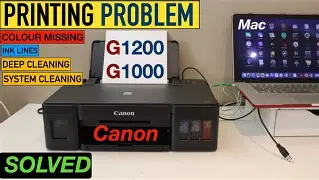
Real-world use: home users who print intermittently (for example, a few pages per week) can run a quick nozzle check and targeted clean rather than a full deep cleaning, saving ink and avoiding unnecessary waste. For frequent printing environments, scheduling maintenance during low-use hours keeps print quality consistent. The article recommends keeping a sample page for reference after a fresh nozzle alignment so future checks are easier to interpret.
3. Borderless and Photo-Friendly Settings Hidden in Advanced Driver Options
Although marketed primarily as a document printer, the Pixma G1200 supports borderless photo printing and fine-detail modes accessible through its print driver. These advanced settings are not obvious in the default print dialog, but exploring the driver reveals options for borderless output, paper type presets (photo, glossy, matte), and color correction controls.
Real-world use: casual photographers or families printing occasional photos can get respectable 4x6 or 5x7 prints without a dedicated photo printer. The catch is that paper choice and driver settings matter: premium photo paper and the “photo” paper preset produce better color saturation and detail. Buyers who plan to print photos should test print small batches to dial in settings before committing to larger prints.
4. Manual Duplex and Batch-Printing Workflows
The Pixma G1200 is a single-function printer without automatic duplex hardware. However, users can implement reliable manual duplex workflows and batching techniques to achieve two-sided output and efficient high-volume jobs. Many users create custom print presets (e.g., “odd pages only” then “even pages reversed”) in their operating system or application to streamline the two-step process.
Real-world use: small businesses and students frequently need double-sided handouts. With a short set of instructions posted near the printer, manual duplex becomes a quick routine: print odd pages, reinsert the stack in the correct orientation, and print even pages. For longer runs, batching jobs into 50–100 page blocks reduces paper jams and user fatigue. This feature is a practical workaround that avoids the expense and maintenance of automatic duplex machinery while still producing professional-looking output.
Find top-rated Electronics products at great prices.
View Offers →5. Network Sharing via a Small Print Server (Raspberry Pi / Router USB) — A Practical Hack
Out of the box the G1200 typically provides USB connectivity only. A lesser-known advantage for owners is that inexpensive hardware like a Raspberry Pi or many modern routers with USB printer support can act as a network print server. That converts the G1200 into a shared resource over Wi‑Fi or Ethernet, enabling mobile and multi‑user printing without buying a wireless model.
Real-world use: a household or micro-office that wants shared printing but cannot afford or does not want the higher purchase price of a Wi‑Fi printer can repurpose a small single-board computer to provide network printing. The setup requires basic network knowledge: connect the printer to the Pi, install and configure a printing service (for example, CUPS), and share the printer on the local network. For non-technical users, many routers include a "USB Printer" feature that is simpler to enable and offers similar benefits.
Detailed Product Review and Analysis
This section examines the Pixma G1200 across dimensions buyers usually prioritize: print quality, running cost, speed, connectivity, build quality, and real-world reliability.
Print Quality
For black-and-white documents, the G1200 produces crisp, readable text suitable for reports, contracts, and classroom materials. The ink formulation and print head resolution allow decent grayscale detail and smooth fills. Color output is adequate for casual photos and charts; however, users seeking museum-quality photo prints or highly accurate color reproduction should consider dedicated photo printers or external color management workflows. In everyday office use, color photos and graphics are acceptable for internal presentations and reference material.
Running Cost
One of the G1200’s strongest selling points is the low cost per page afforded by the refillable ink system. High-capacity bottles deliver significantly more pages than traditional cartridges, which reduces variable costs for households and small offices. Buyers commonly care most about the total cost of ownership: factoring in ink bottles, occasional maintenance, and paper results in a competitive per-page rate compared with cartridge models.
Speed and Throughput
The G1200 delivers moderate print speeds suitable for light to medium workloads. It will satisfy students, home-office users, and small teams that typically print tens to a few hundred pages per month. Very high-volume shops or print-on-demand operations should evaluate higher-throughput models designed for continuous production.
Connectivity and Compatibility
The standard G1200 favors direct USB connection. That offers stable, low-latency printing from a single workstation. For multi-user environments, owners can use the network-sharing workaround described earlier. The printer has broad driver support for common operating systems, but buyers should verify current driver availability for the specific OS version before purchase.
Build Quality and Serviceability
Canon designed the G1200 with a compact footprint and straightforward user-accessible compartments — ink tanks and access to the print head area are easily reached. The physical simplicity makes some routine maintenance tasks more approachable. Users who prefer to keep things simple and avoid complicated mechanical features will appreciate the modest design that keeps repairable parts accessible.
Reliability and Owner Experience
Feedback from long-term owners highlights consistent value: when maintained with periodic cleans and correct refill practices, the G1200 runs reliably for months and years. Common issues reported by buyers are clogged nozzles after prolonged idle periods and occasional driver updates needed for newer operating systems.
Pros & Cons
- Pros:
- Very low running cost due to refillable high-capacity ink tanks.
- Visible ink levels simplify inventory management.
- Simple, compact design with accessible maintenance routines.
- Driver-based advanced settings enable borderless and photo printing.
- Can be shared on a network using inexpensive print-server hardware.
- Cons:
- No built-in Wi‑Fi or automatic duplexing; manual workflows required for some tasks.
- Not optimized for high-volume commercial printing environments.
- Photo quality is good for casual use but not for professional photo labs.
- Requires some user diligence in ink refilling and periodic maintenance.
Comparison Table — Pixma G1200 vs. Similar Models
| Feature | Canon Pixma G1200 | Canon Pixma G2200 | Epson EcoTank Entry Model |
|---|---|---|---|
| Printer type | Inkjet, refillable tank, single-function | Inkjet, refillable tank, single-function | Inkjet, refillable tank, often multifunction |
| Connectivity | USB-only (easy direct connection) | USB-only or selectable regional variants | Models vary; many include Wi‑Fi |
| Auto duplex | No (manual duplex possible) | Depends on model; many lack auto duplex | Some models include auto duplex |
| Photo capability | Borderless printing and photo mode via driver | Similar photo modes; some offer improved color | Good photo modes on higher-end EcoTank models |
| Typical buyer | Home office, students, low-cost document printing | Users wanting slightly expanded features or availability | Users who need Wi‑Fi or multifunction features |
Buying Guide: What Buyers Typically Care About
When considering the Pixma G1200, buyers evaluate several practical factors. This guide explains each consideration and offers actionable tips.
Shop the latest Electronics picks on Amazon.
Browse Now →1. Monthly Print Volume
Estimate how many pages will be printed per month. The G1200 is best for low-to-moderate monthly volumes (for example, a few dozen to a few hundred pages). For sustained high-volume printing, consider higher-end refillable or laser options built for continuous duty cycles.
2. Running Cost and Ink Management
One of the chief reasons buyers choose the G1200 is its low cost per page. Compare the cost of replacement ink bottles, and remember to factor in occasional maintenance ink use. Keep extra bottles on hand if downtime is undesirable, and follow refill best practices to minimize waste.
3. Connectivity Needs
If multiple users or mobile devices will print frequently, plan for network sharing. The G1200 can be shared via a print server, but this requires either an always-on intermediary device (like a Raspberry Pi) or a router that supports USB printers. If built-in Wi‑Fi is required, look at models that include it natively.
4. Print Quality Requirements
Decide whether the primary output is documents or photos. For text-heavy output and occasional color charts, the G1200 is appropriate. For professional photographic work or color-critical projects, evaluate dedicated photo printers or color-managed workflows.
5. Space and Physical Footprint
Measure desk or shelf space. The G1200’s compact design suits home desks, but users should ensure room for paper input/output and access to the ink tanks for refilling.
6. Maintenance and Technical Comfort
Owners must be comfortable doing occasional routine maintenance — nozzle checks, targeted cleans, and careful refills. If the buyer prefers a “set and forget” device with minimal manual intervention, look toward models with stronger automated maintenance or extended service plans.
7. Warranty and Support
Check the warranty terms and local service options. Refillable systems can sometimes be affected by non‑manufacturer inks; buyers should confirm warranty implications and consider manufacturer-recommended supplies to preserve service options.
Tips and Best Practices for Long-Term Ownership
- Refill Routine: Refill before tanks hit critically low. Keeping reservoirs at least 10–15% full reduces air ingestion and nozzle priming cycles.
- Use Draft Mode: For internal drafts and proofs, use economy or draft modes to conserve ink.
- Periodic Printing: Print a small color page weekly to keep nozzles fresh if printing infrequently.
- Store Ink Correctly: Keep replacement bottles sealed and stored at recommended temperatures to preserve ink chemistry.
- Driver Updates: Periodically check for driver updates, especially after major OS upgrades, to maintain compatibility.
- Label Paper Trays and Presets: Create driver presets for commonly used paper types (plain, glossy photo, envelope) to reduce configuration errors.
Conclusion
The Canon Pixma G1200 is more than a budget-friendly printer; it offers a set of practical, often-overlooked features that can significantly improve the ownership experience. From visible refillable tanks and robust maintenance utilities to driver-hidden photo modes, manual duplex workflows, and the ability to become a networked resource through a small print server, these hidden capabilities extend the printer’s utility beyond basic document output. For buyers who prioritize low running costs, straightforward maintenance, and flexible workarounds for network and two-sided printing, the G1200 remains a compelling option. As with any purchase, potential owners should match the printer’s strengths to their typical print volume and connectivity needs to ensure a good fit.