I Switched to the Rog Strix Xg27Aq and Here is What Happened
In the rapidly evolving landscape of high-performance computing, the monitor remains the most critical interface between the digital world and the human eye. Enthusiasts often spend thousands on top-tier GPUs and CPUs, only to bottleneck their visual experience with an aging or substandard display. The transition to a professional-grade gaming monitor like the Rog Strix Xg27Aq represents more than just a hardware upgrade; it is a fundamental shift in how one interacts with digital media, productivity software, and competitive gaming environments. This analysis explores the nuances of such a transition, detailing the technical performance, atmospheric changes, and ergonomic benefits that define the experience of using this specific Fast IPS panel.
The Rog Strix Xg27Aq occupies a sweet spot in the market, targeting the WQHD resolution of 2560 x 1440. For many years, 1080p was the standard, while 4K was the aspirational peak. However, 1440p has emerged as the definitive "gamer’s resolution," providing a significant boost in pixel density and clarity without requiring the astronomical graphical power needed to maintain high frame rates at 4K. When switching to a display of this caliber, the first thing a user notices is the sheer crispness of the UI elements and the expansive screen real estate. But beneath the surface-level aesthetics lies a complex array of technologies designed to reduce latency, enhance color accuracy, and provide a flicker-free experience that traditional office monitors simply cannot match.
The Technical Foundation: Speed Meets Color Precision
The primary driver behind the switch to the Rog Strix Xg27Aq is often the pursuit of the elusive balance between speed and image quality. Historically, users had to choose between TN (Twisted Nematic) panels, which offered incredible speed but poor colors and viewing angles, or IPS (In-Plane Switching) panels, which provided beautiful colors but suffered from slower response times and "ghosting." The Rog Strix Xg27Aq utilizes ASUS’s Fast IPS technology, which claims to offer response times up to four times faster than conventional IPS panels. In practice, this means that the liquid crystal elements in the screen can shift their orientation much more rapidly, effectively eliminating the blurred trails behind moving objects that have long plagued high-end visuals.
When transitioning from a standard 60Hz or even a 120Hz display to the 170Hz overclocked refresh rate of this unit, the fluidity of motion becomes immediately apparent. This is not merely about competitive advantage in first-person shooters, though that is a primary benefit. The benefit extends to general desktop use; dragging windows across the screen, scrolling through complex spreadsheets, and navigating creative software modules feel significantly more "connected" to the user's hand movements. The reduction in input lag—the time between a mouse movement and the corresponding action on screen—creates a sense of immediacy that reduces the mental fatigue associated with delayed visual feedback.
Color Coverage and High Dynamic Range
While speed is the headline feature for gamers, color reproduction is what makes the Rog Strix Xg27Aq a versatile tool for professionals and hobbyist content creators. The monitor boasts a 95% DCI-P3 color gamut coverage, which is a significant step up from the more common sRGB standard. For a user switching from a budget display, the difference is jarring in the best way possible. Reds appear deeper, greens more vibrant, and the overall color volume allows for a more lifelike representation of digital worlds. Each unit comes factory-calibrated with a report to ensure a Delta E of less than two, meaning the color deviation is virtually imperceptible to the naked human eye.
Incorporating HDR400 (High Dynamic Range) support adds another layer to the visual experience. Although HDR400 is considered an entry-level HDR specification compared to the 600 or 1000 standards found in premium televisions, its inclusion on a 27-inch monitor provides a noticeable boost in peak brightness and contrast. In games and films that support HDR, the highlights—such as sunlight reflecting off water or the glow of neon signs in a cyberpunk city—possess a luminosity that standard dynamic range panels cannot replicate. This "pop" adds a sense of depth and dimensionality to the image, making the switch feel like a true generational leap in technology.
Real-World Performance and Use Cases
Testing a monitor in a laboratory setting is one thing, but living with it for daily work and play reveals its true character. The Rog Strix Xg27Aq is designed with a set of features that cater to specific pain points of modern electronics users. One such feature is the Extreme Low Motion Blur Sync (ELMB SYNC). Traditionally, motion blur reduction technologies could not work simultaneously with variable refresh rates (like G-SYNC or FreeSync). This forced users to choose between a tear-free image or a blur-free image. Switching to this monitor allows the user to have both. This technology strobes the backlight in sync with the frame rate, resulting in motion clarity that mimics the "instant" response of an old-fashioned CRT monitor while maintaining the smoothness of adaptive sync.
For the competitive gamer, this means that during high-speed turns in a racing simulator or quick "flick-shots" in a tactical shooter, the environment remains legible. You can track opponents through windows or read distant track markers without the image dissolving into a smear of pixels. For the office worker or the student, the benefit is less about "winning" and more about eye comfort. The Rog Strix Xg27Aq is TUV Rheinland-certified for Blue Light Filter and Flicker-Free technology. Users switching from older displays often report a significant decrease in "digital eye strain" and headaches after long sessions, as the monitor eliminates the high-frequency flickering that often goes unnoticed but stresses the optic nerve.
Looking for the best Electronics deals on Amazon?
Browse Now →The Comparison: Understanding the Market Position
To understand why this switch matters, it is helpful to look at how the Rog Strix Xg27Aq compares to other common categories of monitors that a buyer might be coming from. The following table highlights the technical differences between a standard office monitor, a mid-range gaming monitor, and the Xg27Aq.
| Feature | Standard Office Monitor | Mid-Range Gaming Monitor | Rog Strix Xg27Aq |
|---|---|---|---|
| Resolution | 1920 x 1080 (FHD) | 2560 x 1440 (WQHD) | 2560 x 1440 (WQHD) |
| Refresh Rate | 60Hz | 144Hz | 170Hz (Overclocked) |
| Panel Type | Standard IPS or VA | IPS or TN | Fast IPS |
| Color Gamut | ~95% sRGB | ~99% sRGB | 95% DCI-P3 |
| Response Time | 5ms - 8ms (GtG) | 1ms - 4ms (GtG) | 1ms (GtG) |
| Adaptive Sync | None | FreeSync / G-Sync Comp. | G-Sync Compatible / ELMB Sync |
The switch from a standard office monitor is an "unveiling" of sorts, where the user suddenly sees detail and fluid movement they didn't know they were missing. The switch from a mid-range gaming monitor is more subtle but equally impactful, focusing on the refinement of color, the extra headroom in refresh rate, and the superior build quality that ensures a consistent experience across the entire panel without "IPS glow" or backlight bleeding ruining dark scenes.
Design, Ergonomics, and Connectivity
One of the most overlooked aspects of switching monitors is the physical presence and adjustability of the device. The Rog Strix Xg27Aq features a robust, tripod-style stand that allows for comprehensive ergonomic adjustments. This includes height adjustment, tilt, swivel, and a full 90-degree pivot for portrait mode. For programmers or writers, being able to rotate the screen vertically to view long blocks of code or documents is a transformative productivity hack. The stand itself is heavy and minimizes screen wobble, which is a common complaint with cheaper plastic stands found on entry-level models.
Connectivity is another area where the switch pays dividends. The monitor includes DisplayPort 1.2 and two HDMI 2.0 ports, allowing it to act as a hub for multiple devices. A user can have their high-end PC connected via DisplayPort to take advantage of the full 170Hz refresh rate, while keeping a gaming console and a work laptop connected via HDMI. The inclusion of a 3.5mm headphone jack and USB 3.0 ports further streamlines the desktop workspace, reducing the number of cables trailing highlights from the back of the PC tower.
Aesthetics are subjective, but the ROG design language is distinct. The back of the monitor features a futuristic "cybertext" pattern and an illuminated ROG logo that supports Aura Sync. For users who have invested in an ecosystem of RGB lighting, this allows the monitor to harmonize with the colors of their keyboard, mouse, and internal PC lighting. Even for those who prefer a more understated look, the light can be disabled, leaving behind a sleek, thin-bezel design that fits well in a modern home office.
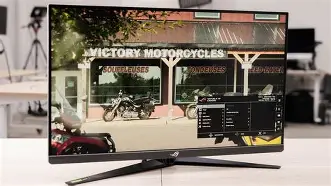
Pros and Cons of the Rog Strix Xg27Aq
Every piece of electronics involves trade-offs. While the switch to the Rog Strix Xg27Aq is largely positive, potential buyers should be aware of the nuances of this specific panel.
- Pro: Exceptional Motion Clarity - The combination of a 170Hz refresh rate and 1ms GtG response time makes it one of the fastest IPS panels in its class, perfect for competitive gaming.
- Pro: Professional Grade Color - With 95% DCI-P3 coverage and factory calibration, it is suitable for video editing and graphic design work where color accuracy is paramount.
- Pro: Versatile Ergonomics - The stand is one of the best in the industry, offering total freedom in positioning to prevent neck strain.
- Pro: G-Sync Compatibility - Certified by NVIDIA to provide a seamless variable refresh rate experience, eliminating screen tearing without introducing input lag.
- Con: HDR Performance - While it supports HDR signals, the peak brightness of 400 nits and the lack of full-array local dimming mean the HDR experience is modest compared to OLED or Mini-LED displays.
- Con: Desk Footprint - The tripod stand design, while stable, requires a deep desk as the rear leg extends quite far back.
- Con: Menu Navigation - While the joystick controller is intuitive, the software-based OSD (On-Screen Display) can be complex for users who just want to "plug and play."
The Buying Guide: What Customers Should Look For
If you are considering making the switch to the Rog Strix Xg27Aq, it is essential to evaluate your current setup and your primary usage patterns. High-performance monitors are not "one size fits all" solutions. Here are the key factors to consider before investing in this specific model.
Looking for the best Electronics deals on Amazon?
Shop Amazon →GPU Requirements and Resolution Scaling
Running a 1440p monitor at 170Hz is significantly more demanding on a graphics card than running 1080p at 60Hz. To truly benefit from this switch, your PC should ideally be equipped with a mid-to-high-range GPU (such as an NVIDIA RTX 3070/4070 or AMD RX 6800/7800 series or better). While you can run the monitor on a lower-end card, you may find yourself having to lower game settings to hit the frame rates that make the high refresh rate worthwhile. Conversely, if you are a professional using it for productivity, even integrated graphics can drive a 1440p @ 60Hz signal for crisp text and high-resolution imaging.
Panel Characteristics and Environment
The Rog Strix Xg27Aq uses an IPS panel, which is known for excellent color and viewing angles but typically has lower contrast ratios compared to VA (Vertical Alignment) panels. This means that in a pitch-black room, blacks may appear as a very dark grey. If your setup is in a dedicated dark room for movie watching, you might notice this. However, in a well-lit office or a typical living room environment, the superior brightness and color of the IPS panel usually outweigh the contrast limitations. Additionally, the matte anti-glare coating on this monitor is exceptional at handling reflections from windows or overhead lights, making it a strong choice for bright rooms.
Future-Proofing and Longevity
Electronics cycles are fast, but monitors tend to have a longer lifespan in a setup than GPUs or CPUs. Buying a WQHD monitor with a high refresh rate in the current market is a form of future-proofing. As technology progresses, 1440p is expected to remain the "sweet spot" for many years, as 4K high-refresh gaming remains prohibitively expensive for the average consumer. Investing in a ROG Strix product also brings the peace of mind of high-end components and a robust warranty, which is vital for a device that will likely be powered on for thousands of hours over several years.
Natural Evolution of the Desktop Experience
Switching to the Rog Strix Xg27Aq is ultimately about removing the barriers between the user and their digital content. In the realm of gaming, it removes the barrier of motion blur and stuttering. In the realm of creative work, it removes the barrier of color inaccuracy and cramped screen space. In the realm of daily use, it removes the barrier of flickering and eye strain.
The transition highlights how much we often settle for "good enough" with our peripheral electronics. We get used to the slight blur of text when we scroll or the washed-out look of a sunset in a video game. It is only when we sit in front of a panel that offers 170Hz of fluid motion and nearly 100% of the cinema-standard DCI-P3 gamut that we realize what we were missing. The "what happened" in this story is not a single event, but a gradual realization that every minute spent at the computer has become more enjoyable, more productive, and significantly more immersive. Whether for the competitive edge in a virtual arena or the simple pleasure of a perfectly rendered photograph, the upgrade to a flagship-tier 1440p monitor remains one of the most impactful changes any electronics enthusiast can make to their daily environment.
As we look toward a future where digital and physical realities continue to blur, the quality of our displays will only become more paramount. The Rog Strix Xg27Aq represents a high-water mark for the current generation of LED-backlit LCD technology, offering a refined, powerful, and reliable experience that justifies the switch for anyone who values visual excellence. It is a testament to how far display engineering has come, packing professional color, extreme speed, and thoughtful ergonomics into a single 27-inch frame that truly changes the way you see the digital world.