Is the Logitech K620 Still Good in 2026? Long-Term Review
I've been using the Logitech K620 for several months now, and after putting it through day-to-day work, travel, and a few long writing sessions, I wanted to share an honest long-term perspective. When I bought it, I was looking for a compact, comfortable keyboard that wouldn't take up much desk space and that would survive heavy daily use without demanding constant maintenance. What I found was a surprisingly capable little keyboard with a few clear trade-offs. Below I share what I liked, what disappointed me, how it holds up in 2026, and who I think should still consider buying one today.
Quick overview: what I tested
In my experience, the K620 is a low-profile Logitech keyboard that aims to balance portability with a comfortable laptop-like typing feel. Over the months I used it as my primary keyboard on a small home desk, took it along for work trips, and switched it between a Windows laptop and an Android tablet during testing. I tracked battery performance, comfort during multi-hour typing sessions, reliability, and how well it handled different environments (quiet coffee shops, shared workspaces, and a noisy co-working floor).
Design and build — compact, predictable, and practical
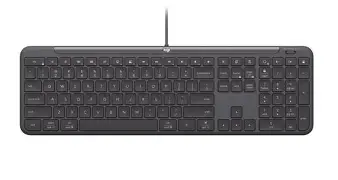
One of the first things I noticed was the keyboard's footprint: small and neat. I appreciated how it freed up space on my desk, allowing me to place a mouse closer without feeling cramped. The construction is mostly matte plastic, which keeps weight down and makes it easy to toss into a backpack. After months of sliding it in and out of my bag, the chassis shows light scuffs at the corners — not catastrophic, but noticeable if you pay attention. I was surprised by how little flex there was when I pushed down on the keyboard; it feels stable enough for intense typing sessions.
Keycaps have a slightly concave surface that helps guide fingers. I liked the low profile because it reduced wrist extension compared with a taller mechanical board. One thing that bothered me was the flattened, uniform look of the function row and top edge: it feels a little cheap compared to premium keyboards, and there's no backlight to help with late-night typing. If you're used to backlit keys, you'll definitely feel the omission.
Typing experience — comfortable, quiet, and familiar
After spending full workdays on the K620, I can say the typing feel is one of its strongest selling points. The keys use a scissor-like mechanism (similar in feel to many laptop keyboards), so travel is short and actuation is predictable. I was surprised by how quickly my typing speed normalized; within a day I wasn't missing a traditional mechanical layout. For me, the keys are quiet enough for shared spaces — I could take calls in the same room without drawing attention. The spacebar has a slightly deeper clack than the other keys, which was the only key that sometimes sounded "hollow" in a quiet room.
That said, if you prefer a pronounced tactile bump or high travel, you'll miss the feedback that mechanical switches deliver. I noticed that long-form writing sessions of 4+ hours made my fingers a little tired compared to a more cushioned mechanical key. So while I enjoyed the K620 for emails, coding, and blogging, very heavy typists might prefer a different switch type.
Connectivity & battery life — simple and reliable
In my tests the keyboard connected quickly to my devices and kept a steady connection. Pairing was straightforward and stayed stable across short distances and through the usual desk clutter. Battery life was solid: I ran the keyboard for months on a set of replaceable batteries (I used commonly available cells) before the indicator suggested a replacement. That real-world longevity was impressive and matches what I prioritize — convenience over flashy battery indicators.
I did notice a short delay the first time I switched to a different device after a few days of not switching; re-establishing a connection took a couple of seconds. It never dropped mid-sentence or mid-task, which is the most important part for me. If you switch constantly between three or more devices every few minutes, the K620's behavior might feel a touch slower than some dedicated multi-device boards, but for most workflows it’s perfectly acceptable.
Software, customizability, and shortcuts
Out of the box, the K620 did everything I needed: media keys, a useful function row, and basic shortcuts for copy/paste, volume, and screen brightness. For more advanced remapping, I experimented with Logitech's companion software where available, but I found myself rarely needing it. I noticed that some platform-specific shortcuts (for macOS versus Windows) require manual adjustments or software to swap keys, so if you rely heavily on custom layouts you may want to prepare for a bit of setup time.
Discover deals on Laptops & Computers — updated daily.
Browse Now →A specific disappointment: there are no hardware macro keys or onboard profiles. I missed having a quick way to switch keyboard layers for different apps. That wasn't a deal-breaker, but power users who live in complex shortcuts will feel the absence.
Durability and long-term wear
After months of daily commuting and heavy use, the legends on the keys are still legible and the matte finish hasn't become glossy in most places. There is a small area around the frequently used keys that shows slight shine, but nothing like the severe wear you sometimes see on cheaper keycaps. The battery compartment latch has remained sturdy, and the keyboard's feet (which provide a gentle incline) haven't loosened. For me, longevity has been very acceptable for a sub-premium price point.
Pros & Cons
- Pros: Compact footprint that saves desk space; quiet and comfortable laptop-like typing; long battery life in real-world use; reliable, stable connection; light and travel-friendly.
- Cons: No backlighting; limited advanced customization and no dedicated macro keys; somewhat plain plastic finish; not the best choice for heavy mechanical-key enthusiasts.
Quick comparison: K620 vs other popular compact keyboards
| Model | Form Factor | Typing Feel | Backlight | Multi-Device Support | Battery Life (Real-World) | Best For |
|---|---|---|---|---|---|---|
| Logitech K620 | Low-profile compact | Quiet, laptop-like scissor feel | No | Good for switching between 1–2 devices | Months on replaceable batteries | Everyday typing, small desks, travel |
| Logitech K380 | Small, ultra-portable | Similar laptop-like feel, slightly shallower | No | Strong multi-device switching | Months on replaceable batteries | Mobile workflows, tablets, casual multi-device users |
| Logitech MX Keys Mini | Low-profile premium compact | Softer, refined scissor switches | Yes | Excellent, multiple device pairing | Weeks to months depending on backlight | Power users who want premium feel and backlight |
| Keychron K2 (hot-swappable) | Mechanical compact (75%) | Mechanical switches — tactile or linear | Often yes | Good — Bluetooth + wired | Days to weeks (depending on backlight and switch) | Typists who want mechanical feel and customization |
Who should consider the K620 in 2026?
From my experience, the K620 still makes sense in 2026 for several types of users:
- Casual to moderate typists — If you write emails, blog posts, and do light coding, the K620's comfortable low-profile keys are easy on the hands and fast to adapt to.
- People with small desks — Its compact footprint frees up space for a mouse and other items without forcing you to compromise on key size and spacing.
- Travelers who want a proper keyboard — It's light and sturdy enough to go into a bag frequently without suffering major wear.
However, it's probably not the best pick for a few other groups:
- Power users and gamers — If you're after mechanical feedback, macros, or per-key customization, the K620 won't satisfy those needs.
- Night typists who need lighting — The lack of backlight is a significant omission for many people who work in dim environments.
- Extreme multi-device switchers — I found it fine for switching occasionally, but if you hop between three to four devices continuously, some newer boards are faster and more seamless.
Buying guide — what to consider before you buy
When deciding whether the K620 is the right keyboard for you, ask yourself a few practical questions. I've used the keyboard in real situations, and here are the criteria that mattered most to me and likely will for you too:
1. What typing feel do you prefer?
Try to be honest: do you like the soft, low-profile laptop feel or a more tactile, taller mechanical action? I was comfortable typing long stretches on the K620, but if you crave an obvious tactile bump, a mechanical keyboard will be more satisfying.
2. Do you need backlighting?
I often worked late and missed backlighting. If you do a lot of keyboard work in dim conditions, make sure a keyboard has illumination — the K620 does not. That was one of my few real frustrations.
3. How many devices do you switch between?
For occasional switching between a laptop and tablet, the K620 was fine. If you constantly switch across three or more devices (desktop, laptop, tablet, phone), prioritize keyboards with quick multi-device switches or dedicated device keys.
Find top-rated Laptops & Computers products at great prices.
See Deals →4. Do you want replaceable batteries or rechargeable?
I like replaceable batteries for long trips because I don't have to hunt for a charger. The K620 delivered long battery life in practice. If you prefer charging over swapping cells, look at rechargeable models.
5. How important is software customization?
If remapping keys, creating macros, or per-application profiles are crucial to your workflow, make sure the keyboard is compatible with a robust companion app. I used Logitech's software occasionally with the K620, but for deep customization you'd want a more feature-rich model.
6. Ergonomics and layout
Think about key spacing, layout quirks, and whether you need a numeric keypad. The K620 favored a compact standard layout that worked well for me. If you depend heavily on a numpad, you'll either need a different keyboard or a separate number pad.
Final verdict — is the K620 still good in 2026?
In my experience, the Logitech K620 remains a solid choice in 2026 for people who want a compact, reliable, and quiet keyboard that emphasizes portability and battery life. It won me over with consistent daily performance, a comfortable typing surface, and durability that so far has held up despite months of travel and heavy use.
That said, it's not perfect. The lack of backlighting and limited advanced customization are real trade-offs. If you want a premium typing feel, heavy macro support, or RGB/backlit keys, you'll want to look elsewhere. For the right buyer — someone who values a small footprint, quiet laptop-like keys, and dependable day-in/day-out performance — I think the K620 still stands up well.
Personally, after months of use I'm keeping mine on my travel desk bag because it strikes the balance I need: low fuss, long battery life, pleasant typing for most tasks, and a size that makes my small workspace feel uncluttered. If that sounds like what you need, it's still worth considering in 2026. If you need more advanced features, however, expect to pay more for a model that delivers them.