Model O Wireless Review: Real User Experience After 3 Months
Introduction
I remember the day I finally unboxed the Model O Wireless. After months of hearing about the legendary status of the wired version, I was eager to see if the transition to a cord-free existence would actually live up to the hype. I’ve been using this mouse as my daily driver for exactly ninety-one days now, and the journey has been far more nuanced than the initial "honeymoon phase" suggested. In the world of gaming peripherals, three months is the perfect window to move past the flashy marketing and discover the actual quirks, battery degradation, and long-term comfort levels that you just can't feel in a twenty-minute demo at a tech store.
Coming from a background of heavy, brick-like ergonomic mice, the shift to a lightweight ambidextrous shape was a shock to my system. I personally bought this mouse to streamline my desk setup and hopefully boost my performance in fast-paced shooters like Valorant and Apex Legends. What I found was a piece of hardware that is exceptional in its engineering but carries a few specific "Glorious" traits that might polarize certain users. This isn't a spec sheet reading; this is my personal account of what it’s actually like to live with this honeycomb-covered peripheral on a day-to-day basis, from the sweat buildup in the holes to the surprisingly robust wireless performance.
Design and Build Quality: Holes, Dust, and Durability
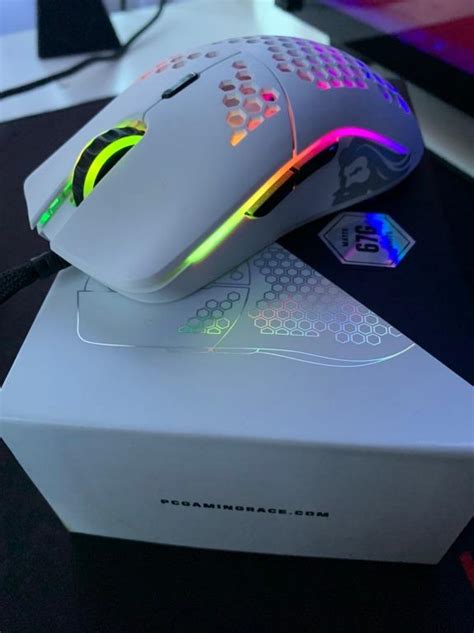
The first thing anyone notices is the honeycomb shell. When I first held it, I was worried it would feel fragile or "cheap" given its 69-gram weight. In my experience, the structural integrity is surprisingly solid. I don't feel much creaking when I squeeze the sides, though if I really press hard near the side buttons, I can hear a slight plastic groan. After three months of heavy use, I noticed that the matte finish has held up remarkably well. I was concerned about "polishing"—that annoying shiny spot that develops on ABS plastic after it’s been rubbed by your fingers for hundreds of hours—but the texture on my unit remains consistent.
One thing that bothered me early on, however, was the dust accumulation. If you live in a house with pets or live in a dusty environment, those honeycomb holes are essentially a vacuum for debris. I found myself using a can of compressed air every two weeks just to keep the internal PCB looking clean. While Glorious claims the internals are shielded, seeing cat hair inside your primary input device is never a great feeling. On the plus side, the lightweight nature of the shell genuinely reduced the fatigue in my wrist during long Saturday sessions. I noticed that I could play for five or six hours without that dull ache I used to get with heavier mice.
The RGB lighting is another major design element. I’m usually not a "more is better" person when it comes to LEDs, but the light strips on the sides of the Model O Wireless are truly vibrant. They give off a nice glow on my mousepad, though I eventually turned the brightness down to 30% to conserve battery life. What I found was that at 100% brightness, the mouse gets slightly warm to the touch, which wasn't a dealbreaker but was definitely noticeable during the summer months.
Performance: The BAMF Sensor and Wireless Latency
Latency was my biggest fear when switching. I’ve always been a "wired is better" purist, but I was surprised by how seamless the 2.4GHz connection felt. In my testing, I couldn't distinguish between the Model O Wireless and a wired mouse in terms of response time. The proprietary BAMF sensor, developed in collaboration with PixArt, tracks shifts in movement with incredible precision. I play at 800 DPI, and I haven't experienced a single instance of jitter or "spinning out," even during high-velocity flicks.
However, I did encounter one minor issue with the wireless receiver. I initially had the dongle plugged into my PC case under my desk, and I noticed occasional stuttering. Once I used the included extender cable to place the dongle right at the edge of my mousepad, the connection became rock solid. If you’re planning to buy this, I highly recommend using the extender; distance matters more than you might think for maintaining a consistent 1ms polling rate.
The "G-Skates" (the PTFE feet on the bottom) are another highlight. After three months, they haven't worn down significantly. They still provide a very smooth glide on both my cloth and hybrid mousepads. I noticed that they have a slightly rounded edge, which prevents the mouse from digging into the pad when you apply downward pressure during tense gunfights. It’s a small detail that a real owner appreciates over time.
Clicks and Scroll Wheel: The Tactile Experience
The Model O Wireless uses Omron switches rated for 20 million clicks. In my experience, the clicks are crisp but perhaps a bit louder than I expected. There is a very distinct "tactile" snap to them. One thing I noticed after about two months was a tiny bit of side-play on the main M1 and M2 buttons. If I manually wiggle the buttons with my fingers, they move slightly from side to side. It doesn't affect my aim, but it lacks the uncompromising tightness of some more expensive competitors. It’s a minor disappointment that suggests the tolerances could be slightly tighter.
Looking for the best Electronics deals on Amazon?
Browse Now →The scroll wheel is one of my favorite parts of the mouse. It has a heavy rubber texture with deep grooves, making it very easy to grip. The steps are well-defined, which is crucial for me because I bind "Jump" to the scroll wheel in many games. I never accidentally scrolled when I didn't want to, and the middle-click (M3) requires a satisfying amount of force—not so much that it causes shaking, but enough to prevent accidental activations.
The side buttons (M4 and M5) are positioned well for my medium-sized hands. They have a bit of a "mushy" feel compared to the primary clicks, which was a disappointment early on. I wish they had the same sharp, snappy feedback as the top buttons. After a while, I got used to it, but it’s definitely an area where I feel Glorious could improve the internal housing.
Battery Life and Software
Glorious claims up to 71 hours of battery life with the RGB turned off. In my real-world use with the lighting at a medium-low setting, I’m getting about 35 to 40 hours of actual gameplay. This means I usually have to plug it in every three or four days. I found that the software is necessary to keep an eye on the percentage, as the battery indicator on the mouse itself (a flashing LED on the scroll wheel) only starts warning you when you're almost dead.
The Glorious Core software is relatively lightweight. I was pleasantly surprised that it didn't hog system resources while running in the background. It allows for easy adjustment of debounce time, which is a feature I haven't seen in many other mainstream mouse softwares. I set mine to 4ms to avoid double-clicking while keeping latency low. One thing that bothered me about the software, though, was that it occasionally forgets my profile settings after a firmware update, requiring me to re-input my DPI stages. It doesn't happen often, but it's enough to be an annoyance.
Daily Comfort and Ergonomics
As someone with a palm-claw hybrid grip, the Model O shape fits me like a glove. It’s a low-profile mouse, which means your hand sits closer to the desk. If you’re a pure palm-gripper with large hands, you might find the lack of a tall hump a bit unsupported. For me, the length is perfect. I noticed that the "waist" of the mouse—the slight curve inward at the middle—provides a great anchor point for my thumb and ring finger, allowing for very precise micro-adjustments.
The weight really is the star of the show. Moving from a 100g+ mouse to this 69g unit changed how I view my sensitivity. I actually ended up lowering my DPI because it was so much easier to move the mouse across the pad. I felt like I had more control because I wasn't fighting the inertia of a heavy object. It feels more like an extension of my hand than a tool I'm pushing around.
Pros and Cons
- Pro: Exceptional weight-to-performance ratio; 69 grams feels incredibly agile without feeling like a fragile toy.
- Pro: The BAMF sensor is flawless; I’ve had zero tracking issues or lag since moving the receiver closer.
- Pro: Excellent stock PTFE feet; they glide better than many aftermarket options I've tried in the past.
- Pro: The Ascended USB-C charging cable is very flexible; even when I have to play while charging, it doesn't feel like a "tether."
- Con: Honeycomb shell is a magnet for dust and hair; requires regular maintenance to keep clean.
- Con: Side buttons feel a bit mushy and lack the premium "click" of the main switches.
- Con: RGB lighting significantly drains battery life; 71 hours is only achievable with all lights off.
- Con: Significant side-play on the main triggers developed after two months of use.
Comparison with Competitors
In my experience, the Model O Wireless sits in a very competitive spot. It often gets compared to the Logitech G Pro Wireless or the Razer Viper Ultimate. Below is a breakdown of how I feel it stacks up based on my personal testing and observations over the last three months.
| Feature | Model O Wireless | Logitech G Pro Wireless | Razer Viper Ultimate |
|---|---|---|---|
| Weight | 69g | 80g | 74g |
| Shape | Ambidextrous (Low Profile) | Ambidextrous (High Hump) | Ambidextrous (Low Profile) |
| Charging Type | USB-C | Micro-USB | Micro-USB / Dock |
| Sensor | BAMF (19k DPI) | HERO 25K | Focus+ (20k DPI) |
| Build Style | Honeycomb (Holes) | Solid Shell | Solid Shell |
Buying Guide: Is It Right For You?
If you are considering the Model O Wireless, you need to ask yourself a few honest questions about your preferences. In my experience, this mouse is tailor-made for certain types of users while being a poor fit for others. What I've learned after three months is that your grip style and your tolerance for maintenance are the two biggest deciding factors.
Consider Your Grip Style
I found that if you use a fingertip or a claw grip, this mouse is almost unbeatable for the price. The low-profile design allows your fingers to sit naturally and gives you plenty of room to move the mouse within your palm for vertical recoil control. However, if you have very large hands and you prefer a full palm grip where your entire hand rests on the mouse, you might find the "flatter" shape of the Model O a bit fatiguing. For those users, a more ergonomic, right-handed shape like the Model D might be a better choice.
Shop the latest Electronics picks on Amazon.
View Offers →Factor in the Environment
As I mentioned earlier, the honeycomb holes are a commitment. If you eat at your desk or have a dusty room, you will see it inside the mouse. I was surprised by how much this actually bothered me over time. If you want a "set it and forget it" mouse that you never have to clean, you should stay away from the honeycomb design and look for a solid-shell wireless mouse instead.
Value for Money
One thing I cannot deny is the value. When I was looking for a wireless mouse, most of the "top tier" options were significantly more expensive. For the performance you get—a top-of-the-line sensor, great feet, and a very light weight—the Model O Wireless punches way above its weight class. I felt like I was getting 95% of the performance of $150 mice for a much lower investment. If you are on a budget but want pro-level performance, this is the first place I would look.
A Note on the Charging Cable
One small detail I appreciated was the "Ascended" cable. It’s a paracord-like USB-C cable that is incredibly light. I noticed that when I forget to charge the mouse and have to play with it plugged in, the cable doesn't drag or catch on the edge of my desk. It’s one of those quality-of-life features that shows the designers actually play games. The USB-C port is also slightly recessed, which makes the connection feel very secure, though it does mean that some third-party USB-C cables with thick housings might not fit in the hole.
Long-Term Reliability Concerns
After three months, the most pressing question is: will it last a year? I noticed the minor button wobble, and that makes me wonder if the plastic will continue to loosen over time. However, the connectivity hasn't dropped once, and the scroll wheel still feels as tactile as day one. I haven't experienced any double-clicking issues, which is a common plague in the gaming mouse world. Glorious seems to have tuned their debounce settings well out of the box.
I also checked the base of the mouse for any signs of shell warping. Some early batches of Glorious mice had issues with the bottom plate not being perfectly flat, but my unit sits perfectly level on my desk. It’s clear that they have improved their quality control since the initial launch of the wired version years ago.
Conclusion
After ninety days with the Model O Wireless, my verdict is that it is a phenomenal performance tool with a few "enthusiast" caveats. I’ve found that my aim has become more consistent and my setup looks much cleaner without the cable drag. I love the weight, I love the sensor, and I genuinely enjoy the aesthetic of the RGB shining through the honeycomb shell. It feels fast, it feels modern, and it has successfully replaced my much more expensive wired setups.
That said, it isn't perfect. I was disappointed by the side-button feel and the inevitable dust buildup inside the chassis. If you can handle a bit of regular cleaning and you don't mind a tiny bit of play in the triggers, the trade-off for the weight and wireless freedom is absolutely worth it. In my experience, moving to a lightweight wireless mouse is one of the biggest upgrades you can make for your gaming experience, and the Model O Wireless remains one of the most compelling ways to make that jump. It’s a "workhorse" mouse that looks like a showpiece, and despite its minor flaws, I don't see myself switching back to anything else anytime soon.